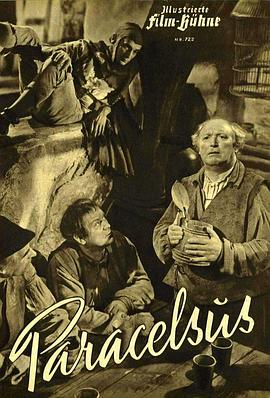
帕拉塞尔苏斯

帕拉塞尔苏斯

1080P蓝光 1943  德国 
上映 :1943-03-12
类型 :剧情 传记 电影  
国家 :德国 
更新 :2026-03-05
豆瓣ID : 4284480 IMDB : tt0036249
IMDB :6.8
1943·德国·剧情 传记 电影 情 ·1943-03-12上映·德语·详情
收藏
  "Paracelsus," which was shown at the First Avenue Screening Room last Sunday and will be repeated there at noon and midnight today and tomorrow, is a very special footnote to film and political history. Never before released in New York, it is the second film made by the great, supposedly left-wing German director, G. W. Pabst, after he returned to Nazi Germany just in time for World War II. Pabst, who died at the age of 82 in 1967, is a fascinating character, known as "the red Pabst" (Papst means pope in German) until he went back to Hitler's new German empire. His best films, including the silent "Joyless Street" with Greta Garbo and "The Threepenny Opera" (1931), are rather uproarious amalgams of stark realism, wild melodrama and pure poetry. Lots of elements in his films look dated today but also there is usually, something that looks totally new and surprising. "Paracelsus," considering when it was made (1943) and under what conditions, is a remarkably interesting film, though full of not especially well disguised propaganda. It's the story of Paracelsus, the 16th-century Swiss healer whose reputation took on a new vogue in the Germany of the early nineteen-forties. Nazi writers and intellectuals began to attribute all sorts of Nazi ideals to the mystic healer who had been ridiculed and oppressed for choosing to write in German instead of Latin and who had challenged the authority of vested (feudal) interests. With the exception of Werner Krauss, who plays Paracelsus as a sort of medieval Dr. Gillespie, crusty but kind, the acting is operatic. The screenplay is full of noble opinions about the German character and its ability to triumph over the ignorance of its enemies. The physical production, however, is astonishingly handsome. In addition, the movie contains one of Pabst's most magical scenes, in which Death, in the person of a juggler, enters a town in the siege of plague and invites the citizens to join him in a celebratory dance. Realism moves into fantasy (and back again) with less awkwardness than most other directors display when making a simple cut between two scenes in the same style. A further footnote to this footnote to history: after the war, Pabst went on to make other films, including "The Trial" (1949), about anti-Semitism in Hungary in 1882, but Werner Krauss was blacklisted, largely for his participation in the notorious "Jud Süss."
展开
资源列表

影片下载分享区

暂无下载资源

快来分享你的珍藏链接,帮助更多影迷吧~

分享的链接需经过管理员审核后才会显示,审核周期一般为1-2个工作日,请耐心等待~

相关影片

  • 片名:帕拉塞尔苏斯
  • 状态:其他
  • 主演:维尔纳·克劳斯 安内莉丝·赖因霍尔德 Harry Langewisch 
  • 导演:G·W·帕布斯特 
  • 年份:1943
  • 地区:德国
  • 类型:剧情 传记 电影  
  • 频道:6.8
  • 上映:1943-03-12
  • 语言:德语
  • 更新:2026-03-05 04:08
  • 简介:  "Paracelsus," which was shown at the First Avenue Screening Room last Sunday and will be repeated there at noon and midnight today and tomorrow, is a very special footnote to film and political history. Never before released in New York, it is the second film made by the great, supposedly left-wing German director, G. W. Pabst, after he returned to Nazi Germany just in time for World War II. Pabst, who died at the age of 82 in 1967, is a fascinating character, known as "the red Pabst" (Papst means pope in German) until he went back to Hitler's new German empire. His best films, including the silent "Joyless Street" with Greta Garbo and "The Threepenny Opera" (1931), are rather uproarious amalgams of stark realism, wild melodrama and pure poetry. Lots of elements in his films look dated today but also there is usually, something that looks totally new and surprising. "Paracelsus," considering when it was made (1943) and under what conditions, is a remarkably interesting film, though full of not especially well disguised propaganda. It's the story of Paracelsus, the 16th-century Swiss healer whose reputation took on a new vogue in the Germany of the early nineteen-forties. Nazi writers and intellectuals began to attribute all sorts of Nazi ideals to the mystic healer who had been ridiculed and oppressed for choosing to write in German instead of Latin and who had challenged the authority of vested (feudal) interests. With the exception of Werner Krauss, who plays Paracelsus as a sort of medieval Dr. Gillespie, crusty but kind, the acting is operatic. The screenplay is full of noble opinions about the German character and its ability to triumph over the ignorance of its enemies. The physical production, however, is astonishingly handsome. In addition, the movie contains one of Pabst's most magical scenes, in which Death, in the person of a juggler, enters a town in the siege of plague and invites the citizens to join him in a celebratory dance. Realism moves into fantasy (and back again) with less awkwardness than most other directors display when making a simple cut between two scenes in the same style. A further footnote to this footnote to history: after the war, Pabst went on to make other films, including "The Trial" (1949), about anti-Semitism in Hungary in 1882, but Werner Krauss was blacklisted, largely for his participation in the notorious "Jud Süss."
搜索历史
删除
热门搜索
本地记录 云端记录
登录账号

启动快捷

极速播放

蓝光画质

下次再说